


Photo 1. Group Photo of the 5th AICEE Participants
The 5th ASEAN International Conference on Energy and Environment (AICEE) was successfully held on October 15, 2025, at the Kuala Lumpur Convention Centre (KLCC), Malaysia. Organised in conjunction with the 25th ASEAN Energy Business Forum (AEBF-25) and the 43rd ASEAN Ministers on Energy Meeting (AMEM), the conference serves as a dynamic platform for researchers to actively engage with policymakers and business sectors in the discussion. With the theme of “Sustainable Energy for ASEAN’s Prosperity: Innovation, Inclusivity, and Regional Cooperation”, the conference aligns with key regional moments, especially Malaysia’s Chairmanship and the launch of the ASEAN Plan of Action for Energy Cooperation (APAEC) 2026-2030 framework.
In its fifth edition, the conference achieved new milestones with over 500 abstract submissions and around 155 presenters, bringing together three key players in the sector—researchers, policymakers, and industries. The success of the 5th ACEE is inextricably linked to the strategic collaboration of various regional partners. The Economic Research Institute for ASEAN and East Asia (ERIA) served as a key partner in developing a cross-regional energy research and policy agenda.
In addition, several universities acted as co-hosts, including Universiti Teknologi Malaysia (UTM), Universiti Tenaga Nasional (UNITEN) through its Institute of Energy Policy (IEPRe), Universiti Teknologi Petronas (UTP), Universiti Teknikal Malaysia Melaka (UTeM), and the Solar Energy Research Institute (SERI) of University Kebangsaan Malaysia (UKM). Additional support also came from academic partners, including the ASEAN Climate Change and Energy Project (ACCEPT), the UN Sustainable Development Solutions Network (SDSN), Sunway University, Ateneo de Manila University, and Caraga State University.


Photo 2. Opening Remark by Dato’ Ir. Ts. Razib Dawood (top), Executive Director, ASEAN Centre for Energy (ACE), Dr Nuki Agya Utama (bottom), Director of the Asia Zero Emission Centre of the Economic Research Institute of ASEAN and East Asia (ERIA), during Soft Launching AEBF-25
The 5th AICEE was kicked off with a joint soft opening ceremony with the AEBF-25, which included remarks from Dato’ Ir. Ts. Razib Dawood, Executive Director of the ASEAN Centre for Energy (ACE) and Dr Nuki Agya Utama, Director of the Asia Zero Emission Centre at the Economic Research Institute of ASEAN and East Asia (ERIA). In light of Malaysia’s ASEAN Chairmanship, Dato’ Razib encouraged participants to use the platform as a way to advance regional cooperation and interconnection that involves diverse stakeholders to achieve a shared prosperity in the future. Meanwhile, Dr Nuki highlighted how ASEAN’s energy transition must be pursued in a way that is inclusive and equitable, with every member state having the capacity to move forward in line with its own national circumstances through the right support and opportunities in place.
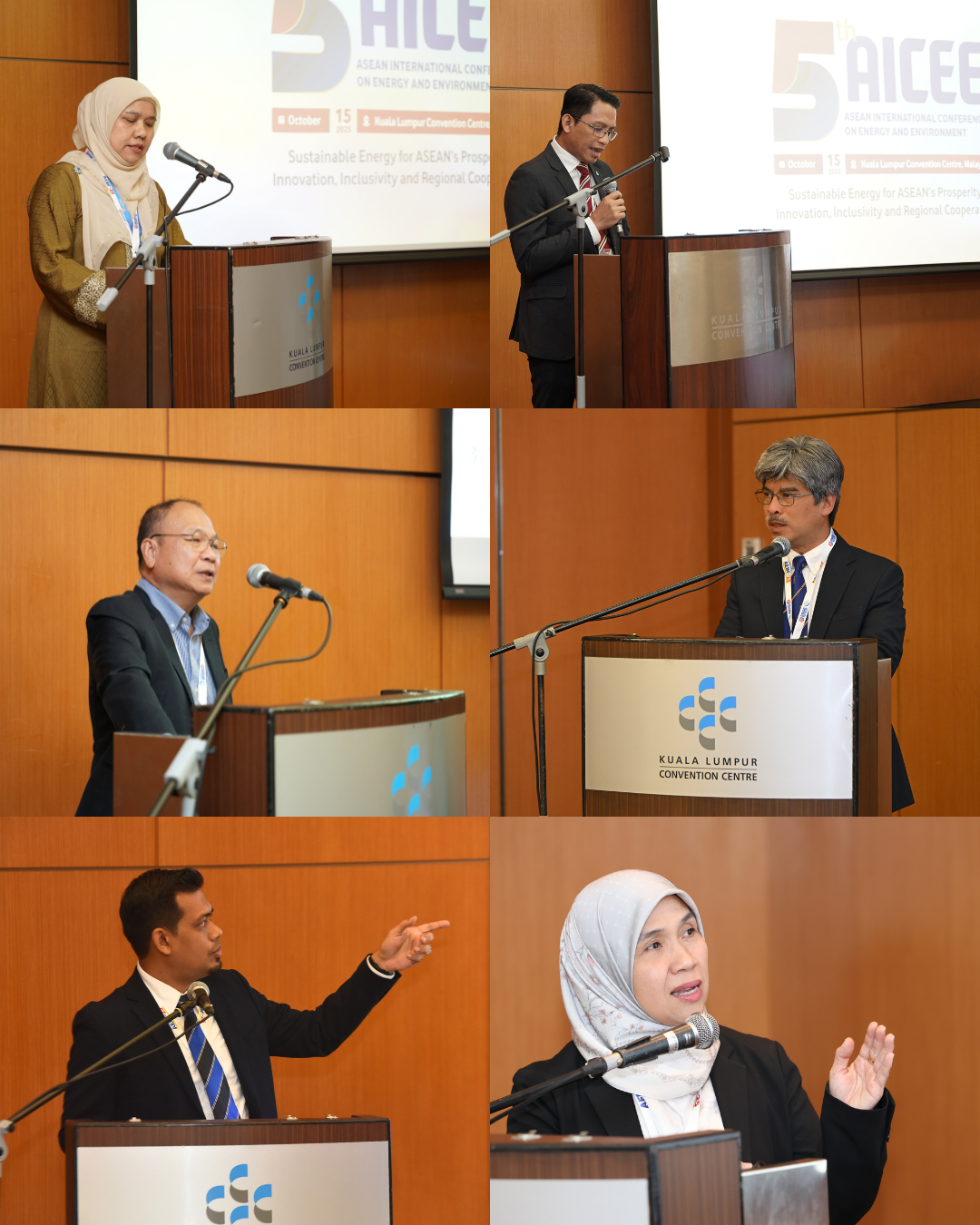
Photo 3. Keynote Speakers from (left to right): Dr Afiza Binti Idris, Ir. Shah Rizal Dahlan, Prof. Woo Wing Thye, Prof. Dr Sufian Jusoh, Assoc. Prof. Ts. Dr Mohammad Fani bin Sulaima, Prof. Ir. Dr Haslenda Bt. Hashim
The conference’s main sessions featured prominent Keynote Speakers who provided in-depth insights into the direction of energy policy and innovation in the region.
Dr Afiza Binti Idris, Director, Energy Division, Ministry of Economy Malaysia, gave remarks that the next APAEC that adopts the concept of just and inclusive energy transition has been the regional compass and guidance. She emphasised, “energy transition is not a one-size-fits-all journey; it’s a uniquely tailored pathway shaped by the country-specific circumstances, resources, and priorities.” Although Malaysia has achieved universal energy access, Dr Afiza recognised that some communities still lack a reliable electricity supply and introduced Malaysia’s efforts to implement localised energy solutions.
Ir. Shah Rizal Dahlan, Vice President of Group Project Delivery (GPD), PETRONAS, delivered a speech with the theme of regional energy cooperation and interconnection, with APAEC as a longstanding guiding framework. He mentioned “unity in diversity, solidarity on purpose” spirit to move energy transition on only on the technical part, but also cross-border integration, improving energy access, and advancing digitalisation.
Prof. Woo Wing Thye, Vice President Asia, UN Sustainable Development Solutions Network Southeast Asia (UN SDSN), Sunway University, discussed the topic of energy, environment and climate policy. In order to have an effective policy, it is crucial to have a clear direction, partnership, and division of labour. Prof. Woo highlighted the principle of social justice and economic equality in formulating policies to mitigate issues such as job losses and risk of environmental damage.
Prof. Dr Sufian Jusoh, Vice Chancellor of Universiti Kebangsaan Malaysia (UKM), shared knowledge on ASEAN’s energy investment with particular focus on geopolitical challenges. With current geopolitical issues happening around the world and the high cost of many technologies needed in the energy transition, identifying investment attractions in the energy sector is pivotal. In attracting investors, “every single layer of government will have to ensure that they can deliver and improve on their investment.”
Assoc Prof Ts. Dr Mohammad Fani bin Sulaima, Dean, Faculty of Electrical Technology Engineering, Universiti Teknikal Malaysia Melaka (UTeM), provided a scene-setting to guide a fruitful discussion on technology management and energy efficiency practices that can drive the energy transition, especially in the industry sector. He highlighted that beyond energy-efficient technologies, a sustainable energy management system is significant, including system thinking, measurement tools, a control system, and data analytics.
Prof. Ir. Dr Haslenda Bt. Hashim, Professor at the Department of Chemical Engineering, Universiti Teknologi Malaysia (UTM), shared insights from her recent research on the Life Cycle Assessment (LCA) of renewable natural gas production, addressing Malaysia’s pressing challenge of solid waste management. Based on the life cycle impact and cost analysis, the conversion from food waste to RNG is more favourable for electricity to replace coal and the transportation sector.

Photo 4. 5th AICEE Awarding Ceremony
At the finale, the 5th AICEE celebrated to recognise and honour researchers for their outstanding performance during the presentation of abstracts. The selection of the awards resulted from the evaluation of chair sessions. Dato’ Razib personally gave awards to the Best Presenters (Oral and Poster) in recognition of their achievements. The list of the 5th AICEE Awards winners is:
Best Poster Award:
- Dimas Cameo Wicaksono, Andika Putra Riandi, Laelia Afrisanthi, Roy Gamma – “The Development of SPG Pagardewa Injection Point as the First Biomethane Injection Facility into Gas Transmission Pipeline in Indonesia: Challenges and Implementation.”
Best Presenter Awards
- Bernadette Anne N. Buensuceso – “Gaps and Gains in ASEAN’s Path to a Just Energy Transition: Progress in Inclusive Policy, Regional Diplomacy, and Implementation.”
- Suramya Dwivedi – “Important Considerations for ASEAN Grid of the Future & Their Impacts on Planning Processes.”
- Manh Tri Dao – “Examining the Levelized Cost of Electricity of Offshore Wind in Vietnam.”
- Jose Mari Lit – “Toward Sustainable Transport: Scenario-Based Insights on Off-Grid Hybrid Microgrids for Charging EV Smart Buses.”
- Nik M Daniel B A Rahman – “A Structured Approach to Frictionless Experiences in Managing Technology Adoption that Drive ROI.”
- Dr Maitreyee Mukherjee – “Carbon Taxation: Aligning Climate Policies with Fiscal Sustainability.”
As part of the AEBF-25 and 43rd AMEM series of activities, this conference reaffirmed ASEAN’s commitment to making research and innovation the foundation of regional energy policy. Through the support of various strategic partners and the contributions of experts, the 5th AICEE not only strengthened the network of cooperation between countries but also marked a concrete step towards a more resilient, inclusive, and low-carbon ASEAN. The conference’s outcomes and recommendations are expected to provide important input for the implementation of APAEC 2026-2030 and to enrich ASEAN’s reports and initiatives on sustainable energy investment.
To access the Conference Proceedings Book of the 5th AICEE, please visit go.aseanenergy.org/5thAICEEProceedingsBook.
For more information on the conference, the Press Release can be accessed here.


