


The ASEAN Centre for Energy (ACE) convened the Regional Workshop on Advancing Policy for Transport System Efficiency on 3 September 2025. This online workshop is the part of the initiatives on advancing clean mobility under the ASEAN Plan of Action for Energy Cooperation (APAEC) Energy Efficiency & Conservation (EE&C) Programme, Outcome-Based Strategy (OBS) 4: Pursue Energy Efficiency in the Transport Sector. This workshop focused on system-level efficiency—how integrated planning, reliable public transport operations, and seamless intermodal connectivity can reduce energy use and emissions while improving daily mobility across ASEAN. A total of 50 participants attended the online workshop, comprising 20 women and 30 men.
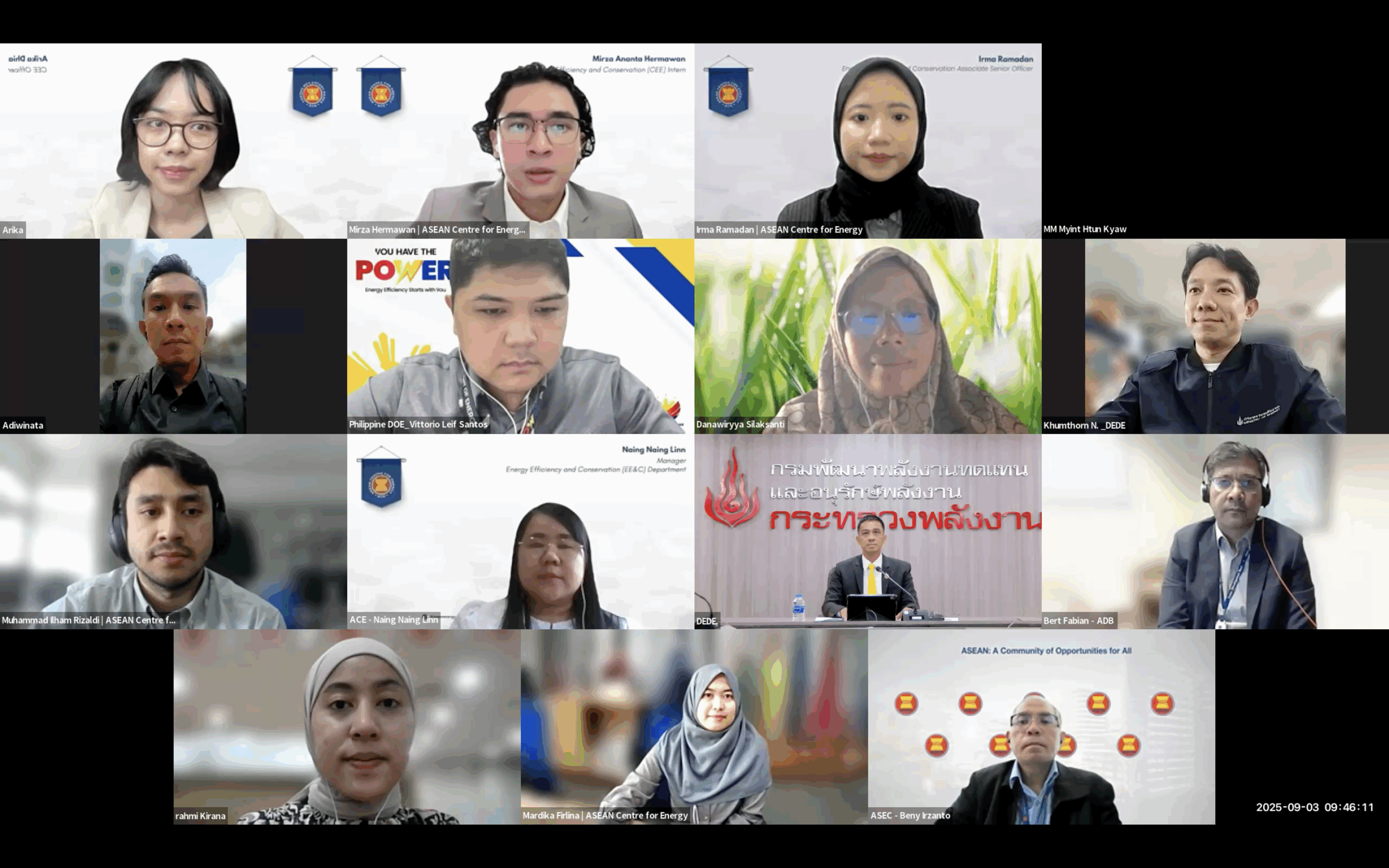
Photo 1. Group photo of Advancing Policy for Transport System Efficiency Workshop Participants.
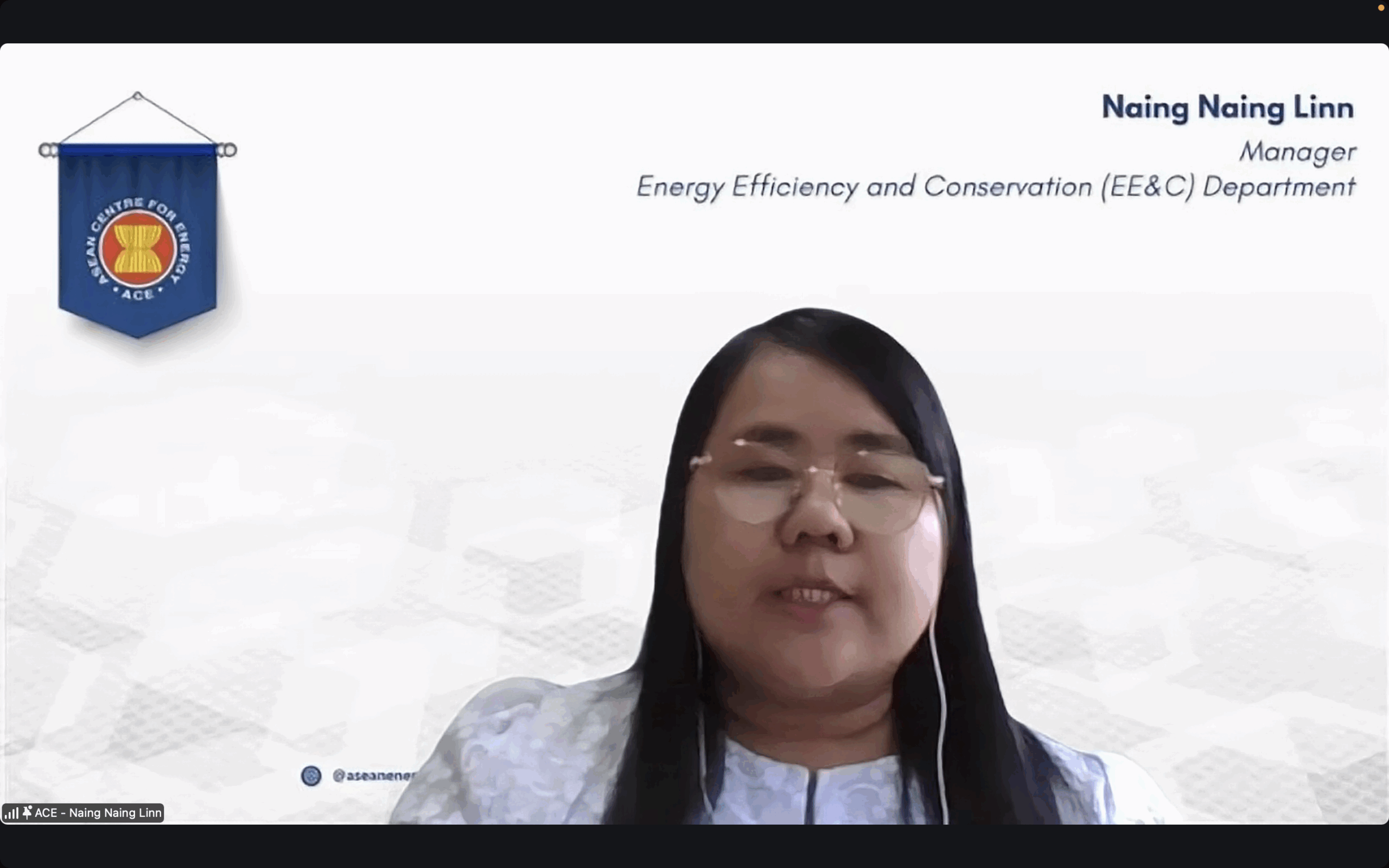
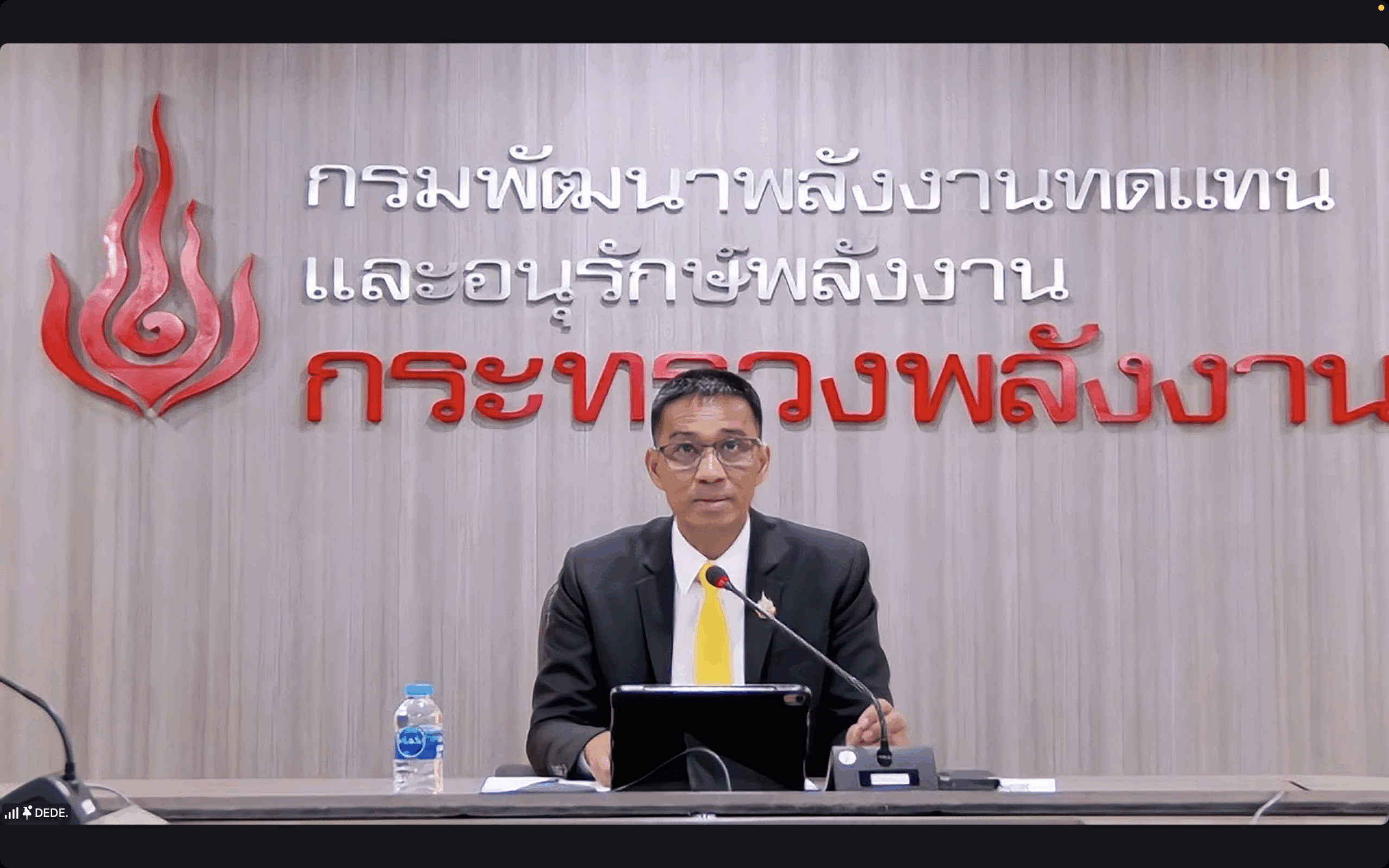
Naing Naing Linn, Manager of Energy Efficiency and Conservation Department at ACE, delivered the opening remarks, underscoring transport’s rising share of regional energy demand and emissions and calling for practical policy pathways that align national action with regional ambition. Speaking on behalf of the Energy Efficiency and Conservation Sub-Sector Network (EE&C-SSN) Coordinator, Adisak Choosuk, Deputy Director General, Department of Alternative Energy Development and Efficiency (DEDE), Thailand, further encouraged coordinated governance and financing to translate policy commitments into reliable and lower-carbon services.
 |
 |
|
Photo 2. Naing Naing Linn, ACE (Left) and Adisak Choosuk, DEDE Thailand (Right) — delivering the Opening Remarks. |
|
To set the discussion over the landscape of transport efficiency in ASEAN, Irma Ramadan, Senior Officer of Energy Efficiency and Conservation Department at ACE, set out the workshop’s policy context and regional goals. Irma highlighted road transport’s dominance in ASEAN’s final energy consumption and outlined near-term levers: mass-transit backbones, safe and attractive first/last-mile access, demand-management tools, and targeted deployment of biofuels and electrification—supported by regional frameworks and public awareness. The workshop started with presentations of country report on the existing policies to improve the energy-efficient transport system. Member States paired clear strategies with concrete measures.
Indonesia—presented by Danarwiryya Silaksanti, Senior Specialist, Environmental Impact Control in the Transport Sector, Centre for Sustainable Transportation Management, Ministry of Transportation— is pursuing a decentralised enablement model, prioritising system integration and bankable delivery beyond the capital, with measures including BRT expansion, Buy-the-Service bus programme, and EV type-testing.
Lao PDR—presented by Latsayakone Pholsena, Technical Officer, EE&C Department of Energy, Ministry of Industry and Commerce— is following a corridor-led integration pathway, including national road upgrades, an electric-bus BRT, charging targets, and station-area SME development to anchor ridership. Both Indonesia and Lao PDR addressed system efficiency alongside early EV uptake.
Meanwhile, Philippines—presented by Vittorio Leif Ericson J. Santos, Senior Science Research Specialist (SRS), Energy Utilization Management Bureau (EUMB), Energy Efficiency & Conservation Program Management and Technology Promotion Division (EPMPD), Department of Energy—focus on institutional compliance framework, including VFELP fuel-economy labelling, the EV Development Act, and a charging rollout backed by public-awareness campaigns.
Thailand—presented by Chutinthorn Mankhong, Director, Bureau of Safety Planning, Office of Transport and Traffic Policy and Planning (OTP), Ministry of Transport—is executing network build-out plus electrification, scaling urban and intercity rail, deploying electric buses, piloting electric boats, and improving first/last-mile access, supported by fuel-economy standards and LDV carbon-tax design.
Collectively, Member States are taking varied approaches but share common priorities: operating networks as one system, scaling cleaner vehicles and fuels, strengthening data and standards, and securing funding for both project delivery and operations and maintenance.


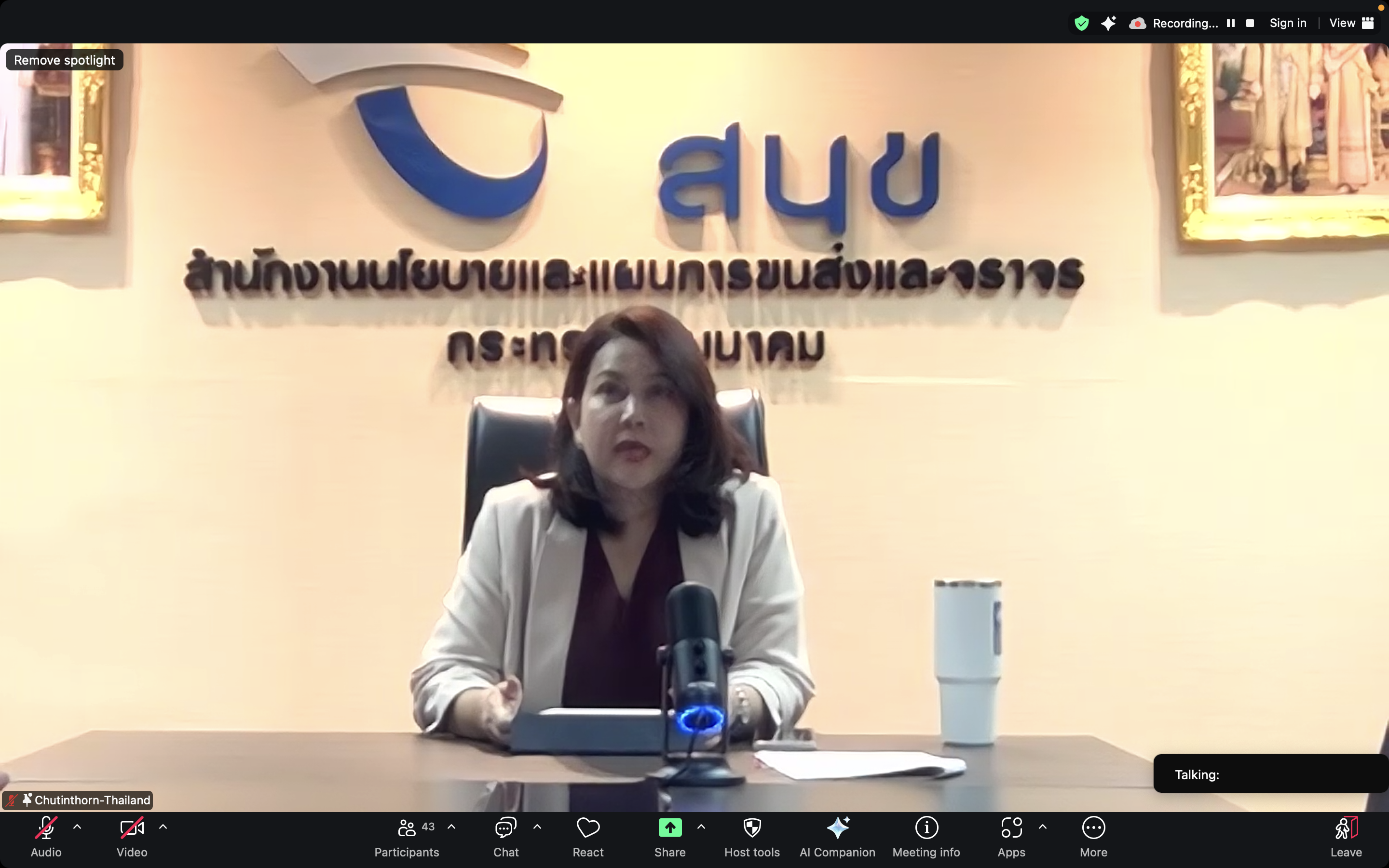
Photo 3. Top left: Danarwiryya Silaksanti (Indonesia) ; top right: Latsayakone Pholsena (Lao PDR); bottom left: Vittorio Leif Ericson J. Santos (Philippines); bottom right: Chutinthorn Mankhong (Thailand) — presenting their national approaches to transport system efficiency.
The next session of the workshop shifted the focus on Enhancing Transport System Efficiency and Regional Collaboration in ASEAN, with speakers from the ASEAN Secretariat, ACE, and International Energy Agency (IEA). Beny Irzanto, Senior Officer, Transport Division, ASEAN Secretariat, set the regional policy context and highlighted near-term priorities: adopting the ASEAN EV Implementation Roadmap, accelerating the digitalisation of public transport and last-mile services, and advancing an HDV electrification roadmap. He called for closer coordination between the energy and transport communities in five areas, with clear, actionable work plans: (1) alternative-fuel supply chains, (2) charging rollout and grid readiness, (3) aligned fuel-economy metrics and incentives, (4) shared GHG-monitoring methods and datasets, and (5) smart mobility linked with renewables and demand management.
In this session, Muhammad Ilham Rizaldi, Officer of Energy Modelling and Policy Planning (MPP) Department at ACE, highlighted the important role of energy modelling in providing insights to policymakers on reducing energy intensity, specifically in the transport sector. He showed that applying national and regional policies can significantly slow transport energy growth through efficiency, modal shift, biofuels, and electrification. Ilham announced that 9th ASEAN Energy Outlook will add least-cost optimisation in transport sector and encouraged AMS to enhance common transport datasets and KPIs to improve comparability and policy analysis across the region.
The session continued with presentation from representatives from IEA and Asian Development Bank (ADB). Renee Stephens, Southeast Asia Energy Efficiency Policy Analyst, and Shane McDonagh, Transport Energy Analyst, from International Energy Agency (IEA), recommended adapting international best practices improve transport system efficiency: start with fuel-economy labelling to build market data and testing capacity; put in place clear compliance and enforcement; then phase in efficiency and CO₂ standards using harmonised test cycles.
Bert Fabian, Senior Transport Specialist, Asian Development Bank (ADB), highlighted implementation gaps from rising motorisation where public-transport access is limited, poor system integration, funding gaps for infrastructure, to complex tax reforms for efficiency and emissions. Bert proposed three parallel tracks: (1) data-driven analysis to update baselines and targets, (2) policy development and follow-through—from labelling to HDV standards—in a practical order of reforms, and (3) scaled investment in integrated mass transit/rail, first- and last-mile links, and Intelligent Transport Systems (ITS), using blended finance and planning for operations and maintenance (O&M).
Following the series of presentation, the workshop continued with a Focus Group Discussion on the key barriers and recommendations on advancing transport system efficiency. Participants ranked the main barriers to transport-system efficiency: (1) congestion and traffic management, (2) insufficient investment in public transport, (3) regulatory gaps that hinder integration, and (4) low public awareness. Participants then ranked the prioritised action: (1) public-awareness campaigns, (2) structured sharing of best practices on integrated-system regulation and design, and (3) coordinated energy-management policies for freight.
The last session of this regional workshop discussed on Advancing Energy-Efficient Transport Systems. Mirzandaru Wicaksono, Urban Mobility Manager, Institute for Transportation and Development Policy (ITDP), emphasised that the most immediate efficiency gains come from operating the network as one system: a single brand and shared KPIs; route rationalisation; integrated hubs with the shortest possible transfer walks; unified passenger information and wayfinding; and integrated fares with inclusive e-payments—using transaction data to optimise routes. As “all transit users are pedestrians,” safe sidewalks and at-grade crossings must be treated as core network assets.
Alloysius Joko Purwanto, Energy Economist, Economic Research Institute for ASEAN and East Asia (ERIA), presented congestion pricing as a practical demand-management tool to spread trips across time, space, and modes—improving fuel efficiency and reducing emissions. While network-wide dynamic pricing is rarely feasible, corridor schemes and targeted priced lanes can work now if paired with public-transport upgrades, equity measures, rigorous evaluation, and technology-enabled enforcement.
The last session concluded with a Focus Group Discussion on the existing policies to address congestion reduction, implement mass rapid transit, improve multi- modal integration, and encourage active mobility measures.
Participants ranked the main implementation barriers: (1) financing constraints (high upfront costs and long payback), (2) political-commitment and governance hurdles, (3) insufficient infrastructure for intermodal links and active mobility, (4) limited public understanding and acceptance of public transport, and (5) gaps in data and technical know-how. For regional action, participants prioritised coordinated public-awareness campaigns, a regional data hub to support evidence-based design and tracking, and intergovernmental platforms to share policy best practices and mobilise green-finance mechanisms for transport infrastructure.
 |
 |
 |
 |
 |
 |
|
Photo 4. Top left: Beny Irzanto from ASEAN Secretariat; top right: Muhammad Ilham Rizaldi from Energy Modelling and Policy Planning Department; middle left: Shane McDonagh and Renee Stephens from IEA; middle right: Bert Fabian from ADB; bottom left: Mirzandaru Wicaksono from ITDP; bottom right: Alloysius Joko Purwanto, from ERIA — sharing the insights on Clean Mobility. |
|
Focus-Group Discussions: Barriers and Recommendations
In moderated breakout sessions, participants compared experiences across ASEAN cities and surfaced recurring obstacles: persistent congestion in metropolitan areas; under-investment in public transport; fragmented rules across agencies and tiers of government; low public awareness; uneven policy uptake and service reliability; and urban form that makes first/last-mile links costly and difficult. They recommended region-wide cooperation to tackle these challenges: designate a lead agency for city-level integration; share comparable transport-energy data and methods; run targeted public-awareness campaigns linked to local priorities such as air quality, time savings; bring freight—especially trucks on priority corridors—into energy-management efforts; and mobilise blended finance while embedding operations and maintenance from the outset.
Participants underscored operating the network as one system—integrated routes and hubs, shorter and clearer transfers, unified passenger information and fares—and lifting day-to-day reliability through bus-priority lanes, steadier headways, and real-time updates. They also highlighted staging fuel switching (biofuels and electrification) alongside operational efficiency, strengthening multimodal integration and active-mobility access, and using cost-effective options such as BRT to deliver rail-like outcomes when budgets are tight. Data-driven planning and phased financing were noted as essential to scale and sustain results.
Arika Dhia, Technical Officer of Energy Efficiency & Conservation Department at ACE, concluded the workshop by presenting the Summary and Way Forwards for improving the transport system efficiency. Naing Naing Linn, closed the workshop with the encouragement to continue cross-sector collaboration. With thanks to all speakers and delegates, Mirza Ananta Hermawan, serving as Master of Ceremony, closed the session and noted that the series will continue on 25 September 2025 with a workshop on high-efficiency vehicles to accelerate cleaner fleets across ASEAN. ACE looks forward to continued collaboration and invites participants to rejoin the discussion at the next session.


